
Lights on Fishing Nets Saves Lives
Placing LED lights along the top of floating gillnets (fishing nets that have notoriously high levels of bycatch) reduces the chances of dolphins and turtles being caught accidentally. And, they do not reduce the catch for fishermen.
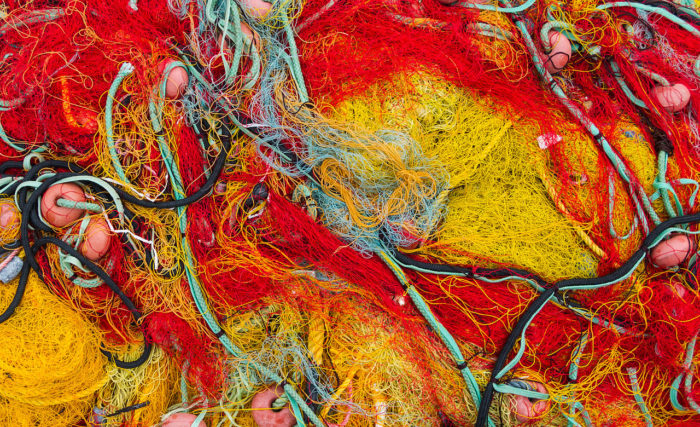 Image: By Jebulon [CC0], from Wikimedia Commons
 Placing lights on fishing nets reduces the chances of sea turtles and dolphins being caught by accident. This is according to new research published in the journal Biological Conservation.
LED lights along the top of floating gillnets cut accidental “bycatch” of sea turtles by more than 70%, and that of small cetaceans (including dolphins and porpoises) by more than 66%.
The study, by the University of Exeter and Peruvian conservation organisation ProDelphinus, looked at small-scale vessels departing from three Peruvian ports between 2015 and 2018, and found the lights didn’t reduce the amount of fish caught from “target species” (i.e. what the fishers wanted to catch).
The findings support previous research which suggested LED lights reduce bycatch of seabirds in gillnets by about 85%. Gillnets, which can be either anchored or move with the ocean currents, are designed to entangle or snare fish by the gills and are the largest component of small-scale fisheries in many countries.
Lead author Alessandra Bielli carried out the analyses as part of her masters research at the Centre for Ecology and Conservation at the University of Exeter. She said: “Gillnet fisheries often have high bycatch rates of threatened marine species such as sea turtles, whales, dolphins and seabirds. This could lead to declines in the populations of these non-target species – yet few solutions to reduce gillnet bycatch have been developed. Sensory cues – in this case LED lights – are one way we might alert such species to the presence of fishing gear in the water.”
The researchers placed lights every 10m along the float line of 864 gillnets, pairing each with an unlit net to compare the results.
“The dramatic reduction in bycatch of sea turtles and cetaceans in illuminated nets shows how this simple, relatively low-cost technique could help these species and allow fishers to fish more sustainably. Given the success we have had, we hope other fisheries with bycatch problems will also try illuminating their fishing nets,” said Exeter PhD graduate Dr Jeffrey Mangel, of ProDelphinus.
Most of the turtles caught in the study were green turtles (86%), though loggerhead and olive ridley turtles were also caught.
Among the small cetaceans captured, 47% were long-beaked common dolphins, 26% were dusky dolphins and 24% were Burmeister’s porpoises.
Professor Brendan Godley, of the University of Exeter, says: “This work has further shown the usefulness of lights on nets to save wildlife. We now need lights that are ever more robust and affordable.”


Sorry, comments are closed on this post